PANCREATITIS – CAUSES, SYMPTOMS, TREATMENTS & PREVENTION

Contents
Overview:-
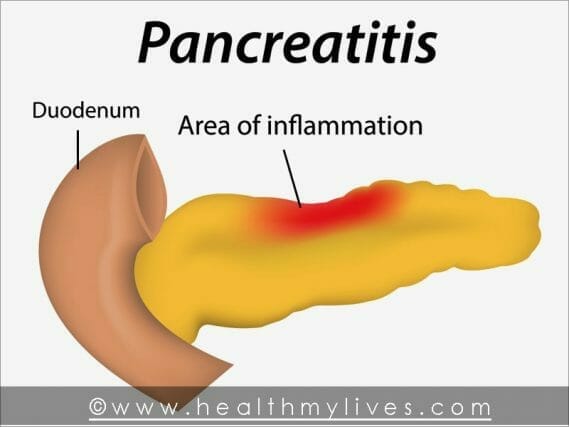
Pancreatitis is inflammation of the pancreas. The pancreas is a long, flat gland behind the stomach in the upper abdomen.
It has two main jobs. It makes digestive enzymes that help break down food, and it makes hormones such as insulin that control blood sugar. That is why pancreas damage can lead to diabetes.
Pancreatitis happens when the digestive enzymes damage the pancreas itself. The main symptom is pain in the upper abdomen that may spread to the back.
There are two main types:
-
Acute Pancreatitis:- It starts suddenly. Most people get better within several days with treatment, but severe cases may need a long hospital stay.
-
Chronic Pancreatitis:- It is a long-lasting condition. The pancreas does not heal, and the damage gets worse over time.
Both types are serious. Anyone with symptoms should see a doctor.
Sign and symptoms of Pancreatitis

Symptoms differ somewhat between the two types.
1. Acute Pancreatitis:-
• Pain in the upper abdomen that starts slowly or suddenly, can be mild or severe and may last several days.
• Pain that spreads to the back.
• Fever.
• Nausea and vomiting.
• Fast heartbeat.
• A swollen or tender abdomen.
People with acute pancreatitis usually look and feel very ill and need medical care right away.
2. Chronic Pancreatitis:-
• Pain in the upper abdomen that may spread to the back, become constant and get worse after eating. Some people have no pain at all.
• Weight loss without trying.
• Diarrhea, nausea and vomiting.
• Steatorrhea. This means greasy, foul-smelling stools, because the body can't digest fat properly.
• Over time, chronic pancreatitis may cause diabetes.
Get care right away for severe or worsening belly pain, fever or chills, shortness of breath, a fast heartbeat or yellowing of the skin or eyes (jaundice).
What are the causes of pancreatitis?
According to the NIDDK, the most common causes are gallstones, heavy alcohol use, genetic disorders of the pancreas and some medicines. Causes include:
- Gallstones. This is the most common cause of acute pancreatitis. A stone passing out of the gallbladder can get stuck in a bile or pancreatic duct and block it.
- Heavy alcohol use. This is a leading cause of both acute and chronic pancreatitis.
- Genetic disorders of the pancreas, including cystic fibrosis.
- Certain medicines.
- Very high levels of blood fats (triglycerides).
- A high level of calcium in the blood.
- An injury to the abdomen, or a procedure called ERCP done for another condition.
- Infections, such as some viruses or parasites, and pancreatic cancer.
In many cases, doctors can't find the cause.
Risk factors and complications
Risk Factors
1. Acute pancreatitis
You are more likely to get pancreatitis if you have gallstones or a family history of them, drink heavily, smoke or have obesity.
Having diabetes, high triglycerides or certain autoimmune conditions also raises the risk. Men are more likely than women to get pancreatitis.
2. Chronic Pancreatitis
Heavy alcohol use and genetic disorders are the main risk factors for chronic pancreatitis. Cystic fibrosis, an inherited disease, is one of them.
Repeated attacks of acute pancreatitis can also lead to chronic pancreatitis. Smoking makes this more likely.
Complications
- Narrowing or blockage of a bile or pancreatic duct.
- Fluid collections called pseudocysts, and dehydration or bleeding.
- Infection in the pancreas.
- Heart, lung or kidney failure in severe cases, which can be fatal.
- Diabetes, if the pancreas can no longer make enough insulin. See our guide to diabetes.
- With chronic pancreatitis: malnutrition, bone loss and a higher risk of pancreatic cancer.
Prevention
You can't prevent every case, but a healthy lifestyle lowers your risk. Steps that help:
- Avoid heavy drinking. If you have had pancreatitis, stop drinking alcohol completely.
- Don't smoke.
- Keep a healthy weight, and lose weight slowly if you need to. Losing weight very fast can raise the risk of gallstones.
- Eat a balanced, lower-fat diet.
- Exercise regularly.

Treatments
Treatment depends on the type and how severe it is. The NIDDK lists these common steps:
- A hospital stay with IV fluids to treat dehydration. Patients start eating again, usually a low-fat diet, as soon as they can. Those who can't eat may get nutrition by feeding tube or IV.
- Pain medicine. Antibiotics are given only if there is an infection.
- Gallbladder removal if gallstones caused the attack, often during the same hospital stay. A procedure called ERCP can remove stones stuck in a duct.
- Draining infected fluid or pseudocysts and, in severe cases, removing dead pancreatic tissue.
- Stopping alcohol and smoking. Help to quit alcohol is an important part of treatment when drinking is the cause.
- For chronic pancreatitis: enzyme pills to help digestion, vitamins, diabetes care if needed, and sometimes surgery or nerve blocks for pain.