4 yoga poses for beginners (men)
Contents
Overview
Research suggests yoga can be a helpful addition to treatment for depression, and reviews have found it helps with stress. The NIH's yoga overview notes the added benefit for depression is small, so it supports treatment rather than replacing it.
Whatever your fitness goals, yoga fits alongside time in the gym. It can help with:
- Flexibility and balance,
- Stress and a calmer mind.
Yoga means "union," joining body, breath, and mind. Many athletes, coaches, and other men use it to recover and stay mobile. The challenge is figuring out which poses suit a beginner.
Take a deep breath and start with the poses below.
4 yoga poses for beginners who are just starting out
1. The posture of the child
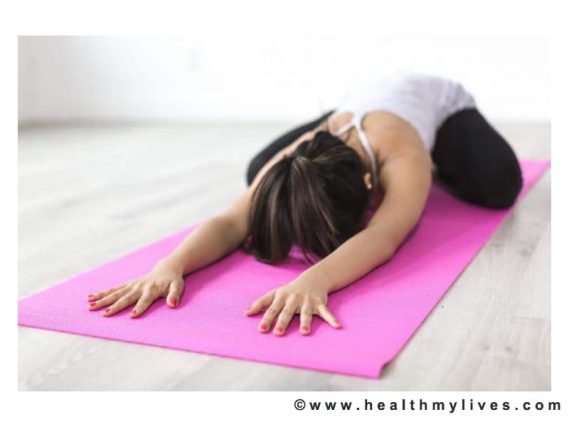
Child's pose is a resting pose you can return to whenever you need a break during practice.
It gently stretches the back, hips, and thighs, which can feel good if you have mild back pain. Skip it or use a cushion if it hurts your knees.
Performing Method:
- Kneel on the floor with your big toes touching and your knees about hip-width apart.
- Sit back toward your heels and lower your forehead to the floor.
- Stretch your arms forward, or rest them along your body with palms up.
- Hold for 30 seconds to a few minutes, breathing slowly through your nose.
2. High Lunge
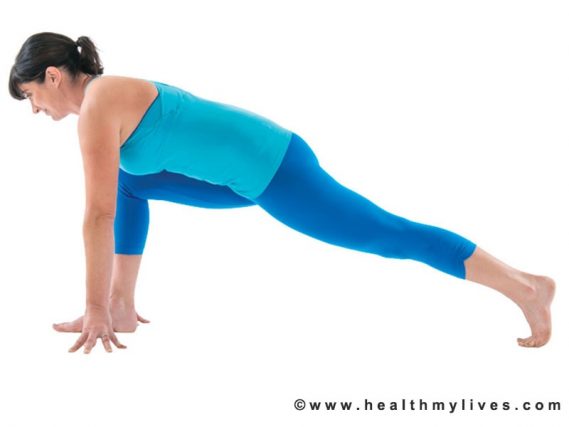
This is a good pose for people who walk or run a lot.
It stretches the hip flexors of the back leg and builds strength and balance in the front leg.
Performing Method:
- Step one foot forward into a lunge, like a sprinter at the starting line.
- Bend the front knee so it sits directly over the ankle, not past the toes.
- Keep the back leg long and the heel lifted.
- Raise your torso upright and, if you like, lift your arms overhead.
- Tighten your belly lightly and breathe deeply. Hold for 5 to 20 breaths, then switch legs.
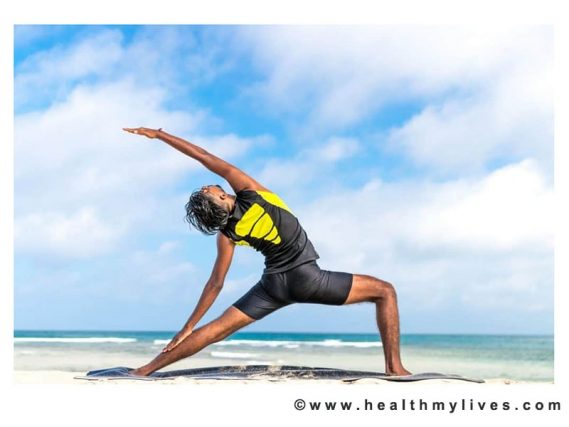
3. The posture of the crescent moon
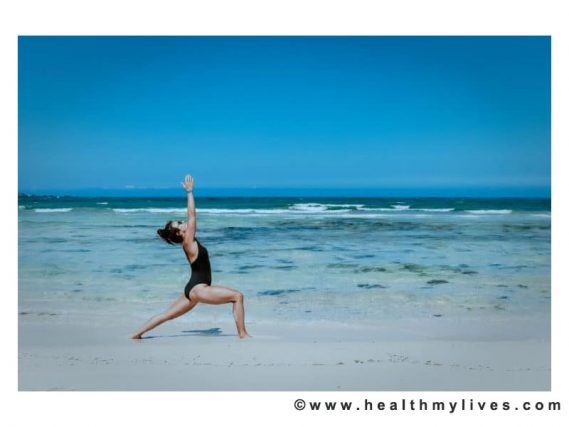
This yoga pose for men is similar to the high lunge, but the back knee rests on the floor, which makes it easier to balance.
It gives a deeper stretch to the front of the hip. At the same time, the crescent yoga pose strengthens the legs.
Performing Method:
- From a lunge, lower your back knee to the floor. Pad it with a folded mat if needed.
- Clasp your hands and raise your arms straight overhead.
- Keep your torso upright and your belly engaged.
- Gently shift your hips forward until you feel a stretch in the front of the back hip.
- Hold for 5 to 20 breaths, then switch sides.
4. Yoga Squat (squatting position)
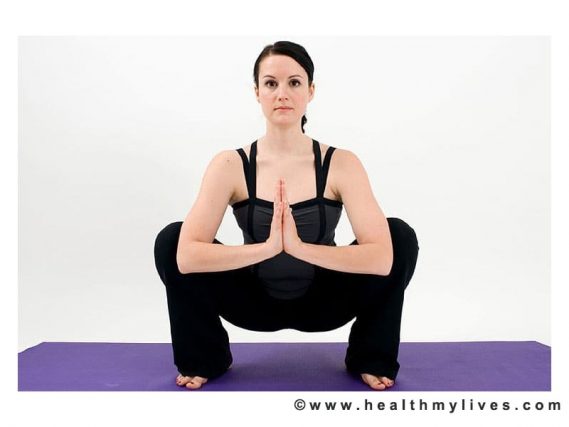
The yoga squat (garland pose) stretches the hips, groin, and ankles and works the legs. Some people also find a deep squat makes bowel movements easier, but that is not proven to treat constipation.
Performing Method:
- Stand with your feet a little wider than your hips, toes turned slightly out.
- Bend your knees and lower your hips as far as is comfortable without touching the floor.
- Keep your heels down. If they lift, place a rolled towel or yoga mat under them.
- Bring your palms together at your chest and press your elbows gently against the inside of your knees.
These four yoga poses for beginners work best when you practice regularly, even 10 minutes a day, with slow, deep breathing.
Most people notice better flexibility and feel less tense after a few weeks of steady practice. If you have an injury or a health condition, check with your doctor first.
Sources
- Yoga: Effectiveness and Safety, National Center for Complementary and Integrative Health (NIH)
- What Is Depression?, American Psychiatric Association