Yoga for children | Effective anti-stress remedy
Contents
This post was most recently updated on July 25th, 2023
Overview
Yoga for children is a popular way to help kids manage stress.
Busy schedules, school pressure and family changes can cause stress for children, not just adults.
Young children often can't name or explain stress, so it may show up in their body or behavior instead.
To know if your child is experiencing stress, MedlinePlus lists warning signs such as:
- New or recurring bedwetting.
- Trouble sleeping or nightmares.
- Changes in appetite.
- Stomach pain or headache with no physical illness found.
- Anger, crying, clinginess, or aggressive or stubborn behavior.
If you notice these signs, help your child cope. Keep routines steady, listen without judging, and encourage play and physical activity.
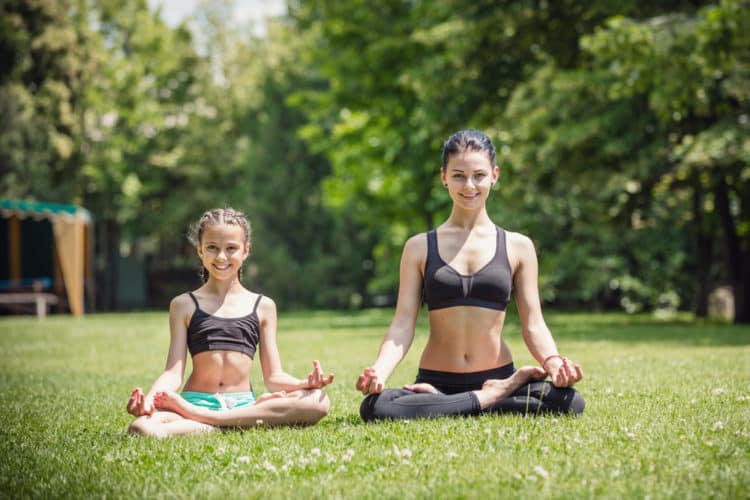
Yoga is one activity many children enjoy, and it isn't just for adults.
Let your child practice yoga to relieve stress
Yoga combines movement, breathing and focus, which can help relieve stress.
Yoga is useful not only in adults but also in children.
Yoga helps children practice breathing and concentration. A review of studies in children and teens found reductions in anxiety or depression in 70% of studies, though the results are not yet conclusive.
It may also help some children feel calmer before stressful events such as exams.
Many parents worry that their kids are too young for yoga.
Simple, playful poses are suitable for most young children, especially when practiced with a parent. Keep sessions short and never force a stretch.
If your child seems withdrawn, unhappy, or can't control their behavior, talk to their doctor. Yoga is not a substitute for professional help.
Yoga poses for children
Warrior position
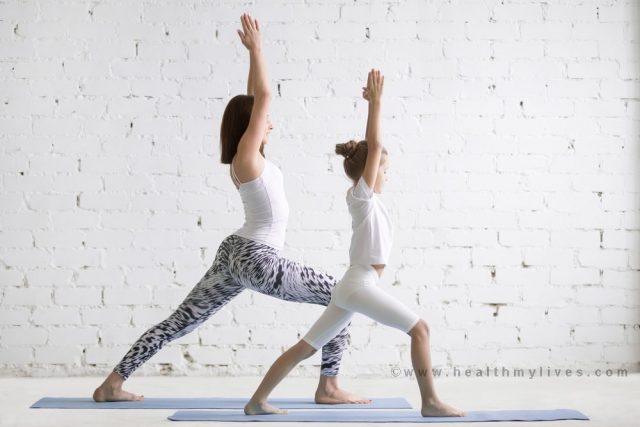
The sequence of warrior poses is done by:
- Step your right foot forward and bend your right knee so it is over the ankle; keep your left leg straight behind you.
- Turn your back foot out at about a 45-degree angle.
- Bring your hands together in front of your chest, then slowly raise them over your head.
- Breathe deeply, gently return to the starting position, then switch sides.
Warrior poses are suitable for young beginners to practice yoga.
Make practice fun by encouraging your child to act like a strong warrior.
Cow / cat posture
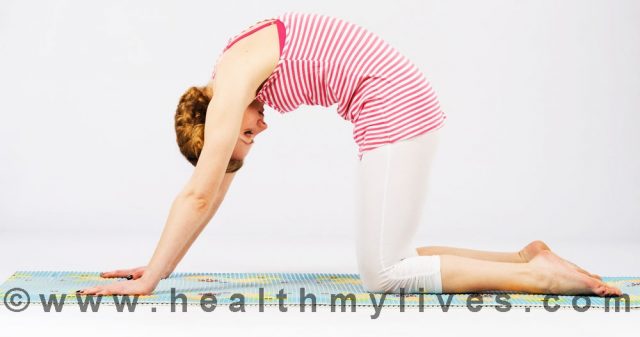
The cow/cat posture gently moves the spine and pairs well with slow breathing, which can help children relax.
When you teach your children these simple poses, create a relaxed atmosphere by playing animals together.
You and your child can pretend to be a cow and a cat and make the animal sounds to keep it fun.
How to perform cow/cat yoga posture
- Start on your hands and knees.
- As you exhale, round your spine up toward the ceiling (cat).
- As you inhale, let your belly drop and lift your head (cow).
- Keep your hands and knees in place.
- Repeat 10-20 times.
The posture of tree branches
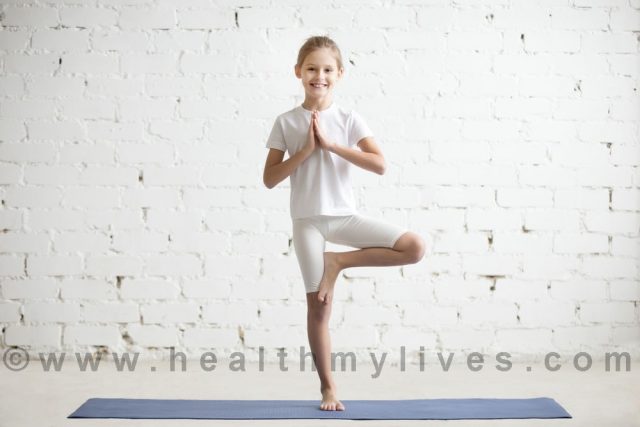
This balance pose helps children build focus and balance and can calm the mind.
Children may find it hard to balance on one leg.
So, let your child place the raised foot wherever feels comfortable, even on the ankle.
Raising the hands overhead can help some children hold the pose longer.
How to perform tree branches yoga posture
- Start in a standing position, your feet together, hands along your hips.
- Shift your weight onto your left leg, bend your right leg and place your right foot on your left ankle, calf or inner thigh (not on the knee). Starting low, at the ankle, is easier for beginners.
- Press your palms together in front of your chest. As you inhale, raise your arms overhead.
The posture of dog bowing
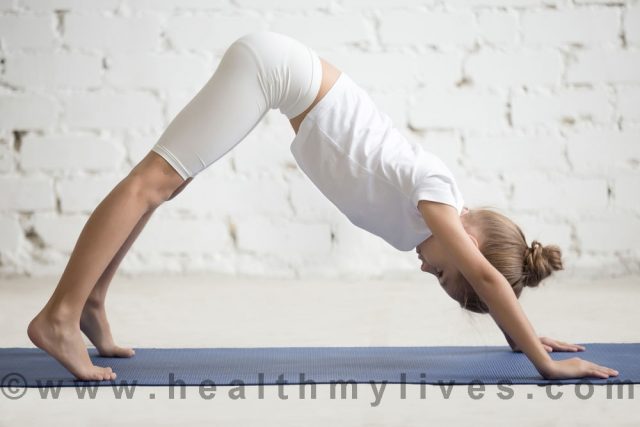
This pose (downward dog) stretches the back, shoulders and calves and is a good pose for relaxation.
How to perform dog bowing posture
- Start on your hands and knees, with hands shoulder-width apart and fingers spread wide.
- Press through your hands and lift your hips up and back, straightening your legs as much as is comfortable.
- Hold for a few breaths, then lower your knees to rest.
The posture of the boat
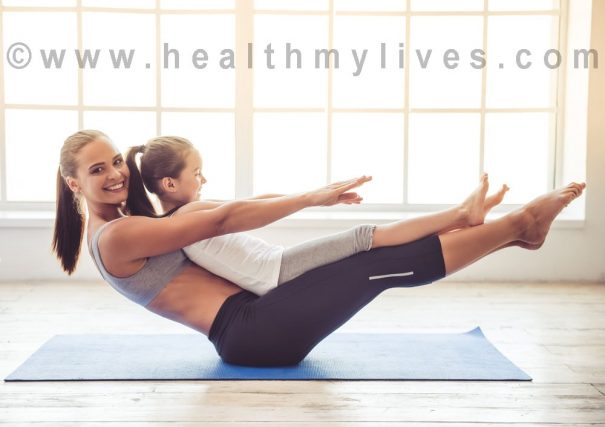
This pose, shaped like a boat, helps your child build balance.
It also strengthens the abdominal muscles.
How to perform the boat yoga posture
- Sit on the floor, straighten your legs.
- Place your hands on the floor slightly behind your hips, back straight, chest lifted. Inhale slowly.
- Breathe out, bend your knees and slowly lift your feet off the floor; straighten your legs if you can.
- Reach your arms straight ahead. If your child is new to this, keep the hands on the floor next to the hips for balance.
- Keep your back straight, chest lifted.
Posture of corpses
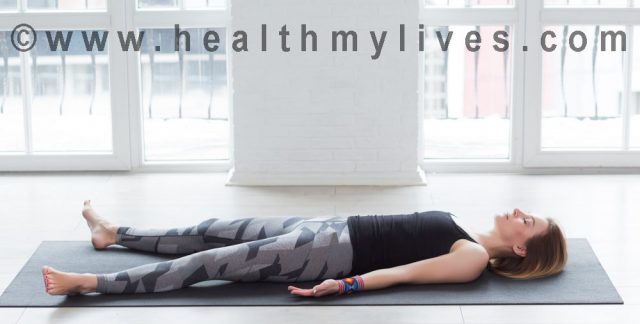
This resting pose suits children who have trouble winding down, for example before a nap or bedtime.
Let your child lie on their back, breathe slowly, and relax the whole body.
You can use this time to practice simple breathing exercises or notice how the body feels.
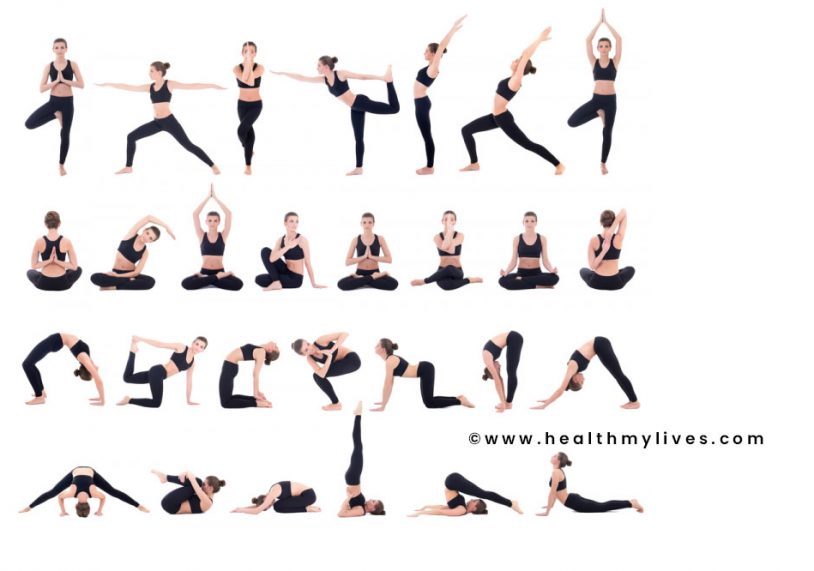
These poses are only part of the yoga poses for children.
While practicing, let your child feel free to express themselves.
If possible, practice the poses together with your child.
Sources
- Stress in childhood, MedlinePlus
- Yoga: What You Need To Know, NCCIH