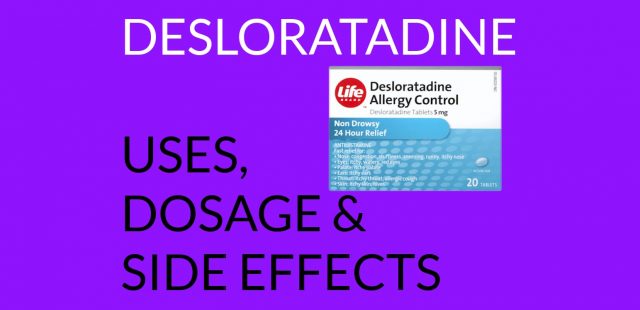
DESLORATADINE – Uses, dosage, side effects and rare cases on side effects
Contents
This post was most recently updated on July 25th, 2023
Overview
Desloratadine is an anti-allergy medicine. It belongs to the antihistamine class of drugs.
It is used mostly for hay fever, allergy-affected eyes or nose, itching, and hives.
It is not an antibiotic, so it does nothing against bacterial infections.
One dose works for about a day. According to the prescribing label for Clarinex (desloratadine), its antihistamine effect appears within about an hour and can last up to 24 hours.
Uses of desloratadine
Mainly, desloratadine is used to treat allergy symptoms.
Here is how it helps with different conditions:
Allergy
During an allergic reaction, the body releases a substance called histamine.
Histamine is one of the main causes of allergy symptoms such as sneezing, itching, and swelling.
Desloratadine works against the action of histamine.
It blocks the H1 receptors that histamine binds to, so histamine has less effect. It does not stop the body from making histamine.
As a result, allergy symptoms usually improve.
Hay Fever
Do you know about hay fever?
If not, here is a short explanation:
It is an allergy (allergic rhinitis) that affects the nose and eyes, often triggered by pollen, dust mites, or pet dander.
If you have ever had hay fever, you have likely had these symptoms:
- A runny nose with watery mucus.
- Sneezing.
- Itchy nose.
- Red, itchy, and watery eyes.
Desloratadine can relieve these symptoms, though it may not prevent all of them.
Hives
Hives (urticaria) are raised, red, itchy spots on the skin.
MedlinePlus notes that desloratadine reduces itching and the number and size of hives.
Side effects of desloratadine
Desloratadine is generally well tolerated.
However, like any medicine, it can cause side effects.
Some of the side effects are given below:
Fatigue
Tiredness or sleepiness can occur, though desloratadine is less sedating than older antihistamines.
In label trials, fatigue and sleepiness were each reported by about 2% of adults taking it.
Dry mouth and sore throat
Dry mouth and sore throat (pharyngitis) are among the most common side effects in clinical trials.
Headache
Headache is a reported side effect, especially in people taking it for chronic hives.
Other common effects include nausea, dizziness, and muscle pain. See a doctor if headaches are severe or keep coming back, including any migraine symptoms.
Rare cases
Rare reactions reported after the drug reached the market include:
- A fast or pounding heartbeat (tachycardia, palpitations).
- Increased appetite.
- Restlessness and movement problems; seizures have been reported rarely.
- Raised liver enzymes and, rarely, hepatitis.
- Hypersensitivity reactions such as rash, swelling, and anaphylaxis.
Stop taking it and get emergency care if you have trouble breathing or swallowing, or swelling of the face, lips, tongue, or throat.
Dosage
You need to consult with a doctor and ask for a prescription before using it.
The doses below come from the U.S. prescribing label and are for educational purposes only.
Please don’t take this without the advice of a physician.
Desloratadine for adults and children 12 years and older
People in this age group, including older adults, take 5 mg of desloratadine once a day.
Desloratadine for children between the age of 6 to 11 years
The label dose is 2.5 mg once a day. Younger children (6 months to 5 years) get smaller doses of the liquid form, only as directed by a doctor.
For adults with hepatic or renal impairment, the label recommends a starting dose of one 5 mg tablet every other day.
Sources
- Desloratadine: MedlinePlus Drug Information, U.S. National Library of Medicine
- CLARINEX (desloratadine) tablet label, DailyMed, National Library of Medicine