Coconut Oil for Melasma: Home Remedies and What Really Works

Contents
- Is coconut oil effective for melasma?
- 6 effective and safe ways to treat melasma with coconut oil
- 1. Use virgin coconut oil to treat melasma
- 2. Treat melasma with coconut oil and honey
- 3. Repel skin pigmentation, dull skin with coconut oil and yogurt
- 4. Brighten and treat melasma with coconut oil and lemon
- 5. Moisturize and treat melasma with coconut oil and aloe vera
- 6. Tips to treat melasma, fade acne scars from coconut oil and turmeric
- Note when treating melasma with coconut oil
- Sources
This post was most recently updated on July 25th, 2023
Many people wonder if coconut oil can treat melasma. Coconut oil is a popular moisturizer for dry skin, hair, and stretch marks. But there is no good evidence that it fades melasma, so set your expectations before trying the home masks below.
Effective Ways To Treat Melasma With Coconut Oil At Home
- Is coconut oil effective for melasma?- 6 effective and safe ways to treat melasma with coconut oil
- 1. Use virgin coconut oil to treat melasma- - 2. Treat melasma with coconut oil and honey- - 3. Repel skin pigmentation, dull skin with coconut oil and yogurt- - 4. Brighten and treat melasma with coconut oil and lemon- - 5. Moisturize and treat melasma with coconut oil and aloe vera- - 6. Tips to treat melasma, fade acne scars from coconut oil and turmeric
- Note when treating melasma with coconut oil
Is coconut oil effective for melasma?
Coconut oil is rich in fatty acids such as lauric acid. It helps the skin hold moisture, and lauric acid has some antibacterial effects in lab studies.
However, no good study shows that coconut oil lightens melasma. Melasma is driven by sun exposure, visible light, heat, and hormones, and moisturizing does not change those triggers.
Dermatologists treat melasma with daily sun protection plus proven creams such as hydroquinone, tretinoin, azelaic acid, and tranexamic acid, according to the American Academy of Dermatology. Think of coconut oil masks as gentle skin care, not as a treatment.
6 effective and safe ways to treat melasma with coconut oil
The masks below are popular home remedies. None is proven to fade melasma. If you try them, patch-test on a small area first and stop if your skin gets red or itchy, since Cleveland Clinic notes that irritated skin tends to make melasma worse.
1. Use virgin coconut oil to treat melasma
Virgin coconut oil can soften and moisturize dry skin. It will not remove dark spots on its own.
Coconut oil can clog pores in some people, so skip it if you are prone to acne.
Procedure:
- Wash your face with lukewarm water and pat dry.
- Apply a thin layer of coconut oil, focusing on dry areas.
- Massage gently for about 1 minute.
- Leave it on for 15-20 minutes, then wash your face with clean water.
- Use 2-3 times a week if your skin tolerates it.
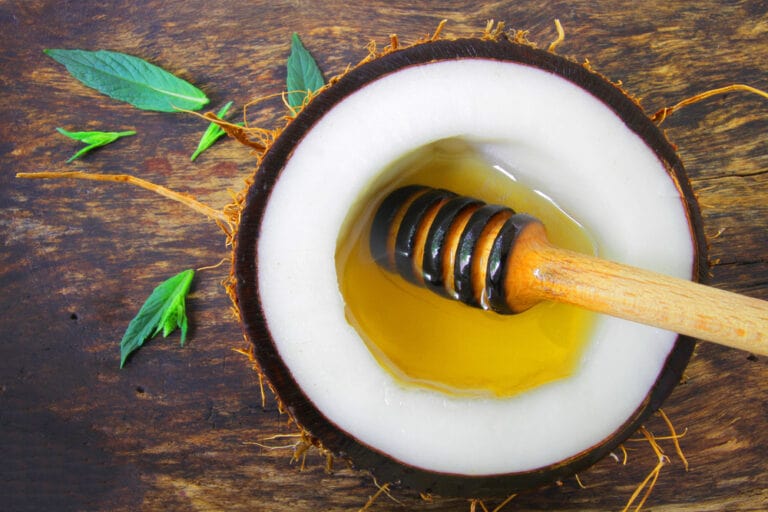
2. Treat melasma with coconut oil and honey
Honey has mild antibacterial and moisturizing properties. There is no evidence that honey fades melasma.
Procedure:
- Mix coconut oil with honey in the ratio 1:2.
- Wash your face and apply the mixture for 15 minutes.
- Gently massage your face, then rinse with clean water.
- Use 2-3 times a week.
This mask can leave skin feeling soft and moisturized. Expect softer skin, not lighter patches.
3. Repel skin pigmentation, dull skin with coconut oil and yogurt
Plain yogurt contains lactic acid, a mild alpha hydroxy acid. Alpha hydroxy acids are among the options dermatologists sometimes use for melasma, but the amount in yogurt is small and unmeasured.
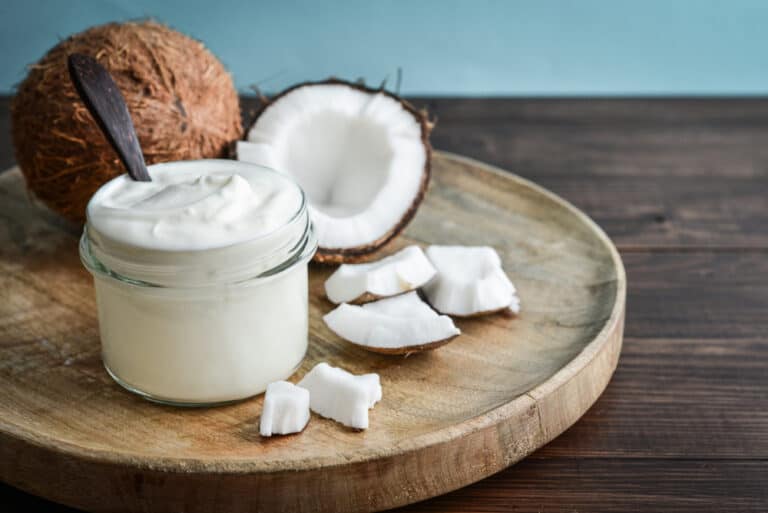
A coconut oil and yogurt mask may moisturize and gently smooth the skin. It does not protect against the sun or prevent new pigmentation.
Procedure:
- Prepare 2 tablespoons of coconut oil and 3 tablespoons of plain, unsweetened yogurt.
- Mix them into a smooth paste.
- Clean your face with lukewarm water.
- Apply the mixture to the dark patches.
- Massage gently in small circles.
- Leave it on for 15-20 minutes and rinse with clean water.
- Use 2-3 times a week.
4. Brighten and treat melasma with coconut oil and lemon
We do not recommend this one. Lemon juice is very acidic (low pH) and can irritate the skin, and irritation can make melasma darker.
Lemon and lime juice on skin that then sees sunlight can also cause phytophotodermatitis, a burn-like reaction that can leave dark patches for months.
If you want a vitamin C product, choose a cosmetic vitamin C serum made for the face. Dermatologists list vitamin C among the gentler options for melasma.
Whatever you use, apply broad-spectrum sunscreen every day. Sun protection is the most important step in controlling melasma.
5. Moisturize and treat melasma with coconut oil and aloe vera
Aloe vera gel soothes and moisturizes skin. Some small studies suggest aloe compounds such as aloesin may reduce pigment, but the evidence for melasma is weak.
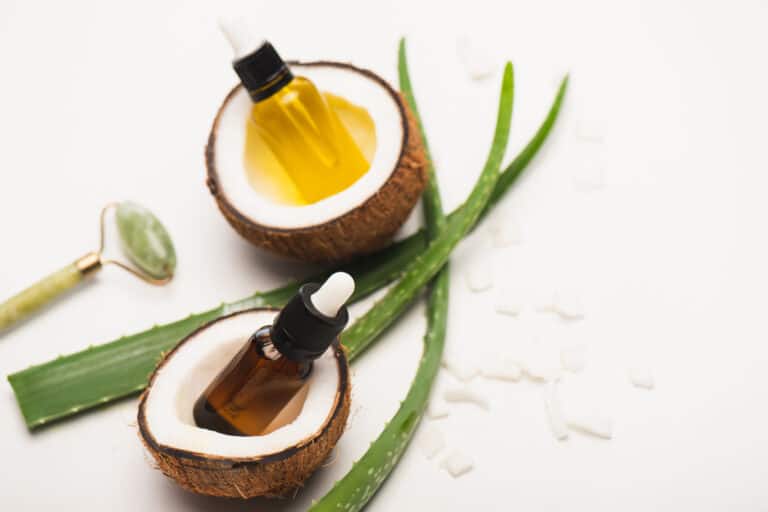
A coconut oil and aloe vera mask is a gentle way to moisturize. Some people are sensitive to fresh aloe, so patch-test first.
Procedure:
- Wash a fresh aloe vera leaf, remove the skin, and cut out the gel inside.
- Rinse the gel to remove the yellow sap (latex), which can irritate skin.
- Blend the aloe gel and mix it with coconut oil.
- Stir gently until a smooth paste forms.
- Clean your skin with a cleanser and apply the mixture.
- Massage gently for 1-2 minutes.
- Leave it on for 15-20 minutes, then rinse with lukewarm water.
- Use 2-3 times a week.
6. Tips to treat melasma, fade acne scars from coconut oil and turmeric
Curcumin, the main compound in turmeric, has antioxidant and anti-inflammatory effects. Lab studies suggest it can block tyrosinase, an enzyme involved in making melanin. That has not been shown to fade melasma in people.
Turmeric powder can stain the skin yellow and may irritate sensitive skin, so use a small amount and patch-test first.
Procedure:
- Mix 2 tablespoons of coconut oil with about 1 teaspoon of turmeric powder.
- Clean your face with lukewarm water and pat dry.
- Apply the mixture to the skin, focusing on the areas with melasma.
- Leave it on for about 15 minutes.
- Wash your face with lukewarm water.
- Use 2-3 times a week if your skin tolerates it.
Note when treating melasma with coconut oil
To use coconut oil safely on skin with melasma, keep these points in mind:
- Protect your skin from the sun. Sunlight is the main trigger for melasma. Coconut oil is not a sunscreen. Apply a broad-spectrum sunscreen with SPF 30 or higher every day and reapply every two hours outdoors, and wear a wide-brimmed hat.
- Use masks in the evening. This keeps fresh masks and any irritation away from midday sun.
- Do not leave coconut oil masks on overnight. Thick oil left on for hours can clog pores and trigger acne in some people.
- Pure coconut oil. Choose virgin coconut oil without added fragrance.
- Do not wash your face with hot water. Heat is a melasma trigger, and hot water can strip the skin’s natural oils and leave it dry.
- Avoid irritating products. Scented soaps, harsh scrubs, and irritating cosmetics can make melasma worse.
Melasma that has lasted a long time often sits deeper in the skin, where home masks cannot reach. If dark patches do not improve, see a dermatologist. Melasma can also come back, so long-term sun protection matters.
Sources
- Melasma: Diagnosis and treatment, American Academy of Dermatology
- Melasma: Treatment, Causes & Prevention, Cleveland Clinic
- Phytophotodermatitis: Rash, Causes & Treatment, Cleveland Clinic