Ciprofloxacin – Uses, Side effects, dosage and warnings

Contents
- Understanding of Ciprofloxacin
- Uses of ciprofloxacin
- Dosage
- What is the dose of ciprofloxacin for adults?
- What is the dose of ciprofloxacin for children?
- Side effects
- Ciprofloxacin warnings
- What does ciprofloxacin do and where do I use it?
- General FAQs
- What type of disease does ciprofloxacin treat?
- How long does it take for ciprofloxacin to start working?
- Is ciprofloxacin a strong antibiotic?
- What bacteria does ciprofloxacin kill?
- What foods should be avoided when taking ciprofloxacin?
- Can I drink alcohol on ciprofloxacin 500mg?
- Can I take ciprofloxacin on empty stomach?
- Sources
This post was most recently updated on July 25th, 2023
Table Of Contents
- Understanding of Ciprofloxacin- Uses of ciprofloxacin- Dosage
- What is the dose of ciprofloxacin for adults?- - What is the dose of ciprofloxacin for children?
- Side effects- Ciprofloxacin warnings- What does ciprofloxacin do and where do I use it?- General FAQs - What type of disease does ciprofloxacin treat?- - How long does it take for ciprofloxacin to start working?- - Is ciprofloxacin a strong antibiotic?- - What bacteria does ciprofloxacin kill?- - What foods should be avoided when taking ciprofloxacin?- - Can I drink alcohol on ciprofloxacin 500mg?- - Can I take ciprofloxacin on empty stomach?
Understanding of Ciprofloxacin
Ciprofloxacin is a prescription antibiotic used to treat bacterial infections. It belongs to the fluoroquinolone (quinolone) drug class. It works by blocking a bacterial enzyme called DNA gyrase, which bacteria need to copy and repair their genetic material. Without it, the bacteria can’t multiply and they die.
Ciprofloxacin tablets are sold under the brand names Cipro and Cipro XR, and an oral suspension (liquid) is also available. Ear drops are sold as Cetraxal and Otiprio, and eye drops as Ciloxan.
Uses of ciprofloxacin

It is an antibiotic that treats bacterial infections only. It does not work against viral infections such as colds or the flu. Uses listed on the FDA-approved label include:
- Bone and joint infections. It treats infection; it does not help broken bones heal.
- Complicated infections inside the abdomen (used together with metronidazole) and infectious diarrhea caused by certain bacteria.
- Ear infections, using ciprofloxacin ear drops such as Cetraxal or Otiprio.
- Lower respiratory tract infections such as some types of pneumonia. It is not a usual choice for Tonsillitis or Pharyngitis, which are mostly caused by viruses or strep bacteria that are treated with other antibiotics.
- Urinary tract infections, including kidney infections.
- Chronic bacterial prostatitis, a long-lasting bacterial infection of the prostate gland in men.
- Skin infections, such as some cases of red, swollen, painful skin infection (commonly called cellulitis).
- Typhoid fever, a bacterial infection.
- Anthrax after the bacteria are inhaled, and plague.
Because of the risk of serious side effects, the FDA label says to reserve ciprofloxacin for people with no other treatment options for acute sinusitis, acute flare-ups of chronic bronchitis, and simple bladder infections.
Dosage
- The dose depends on the type and severity of the infection, your kidney function, and, for children, body weight. Your doctor sets the dose; never change it on your own.
- Tablets are usually taken twice a day, about 12 hours apart, with or without food.
- Treatment usually lasts from 3 days to a few weeks, depending on the infection.
- Do not take it with dairy products like milk or yogurt or calcium-fortified juices alone, because they reduce absorption. It is fine to take it with a meal that includes these foods.
- Take ciprofloxacin at least 2 hours before or 6 hours after antacids, multivitamins, or other products that contain magnesium, aluminum, calcium, iron, or zinc.
- If you miss a dose, take it as soon as you remember. If it is almost time for your next dose, skip the missed dose and go back to your usual schedule.
- Do not take two doses at once or extra doses.
- Finish the full course your doctor prescribed, even if you feel better.
What is the dose of ciprofloxacin for adults?
The examples below come from the FDA-approved label for oral Cipro. They are for reference only; your doctor decides your dose.
The usual dose for adults to prevent anthrax:
For adults who have inhaled Bacillus anthracis bacteria:
- Oral: 500 mg every 12 hours for 60 days.
Treatment should start as soon as possible after a suspected or confirmed exposure. Intravenous (IV) doses are given in the hospital.
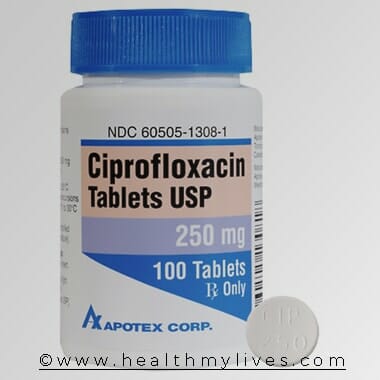
The usual dose for people with urinary tract infections:
- Oral: 250 to 500 mg every 12 hours for 7 to 14 days.
- Simple bladder infections in women: 250 mg every 12 hours for 3 days, but only if other antibiotics can't be used.
The usual dose for people with bronchitis:
For flare-ups of chronic bronchitis or other lower respiratory tract infections:
- Oral: 500 to 750 mg every 12 hours for 7 to 14 days.
For acute flare-ups of chronic bronchitis, the label says to use ciprofloxacin only when other options aren't available.
Ciprofloxacin eye and ear drops
Eye:
Ciprofloxacin eye drops (Ciloxan) treat bacterial eye infections such as conjunctivitis and corneal ulcers. The number of drops and how often to use them depend on the infection, so follow your prescription label exactly.
Ear:
Ciprofloxacin ear drops treat outer and middle ear infections. Use them exactly as prescribed and finish the full course.
What is the dose of ciprofloxacin for children?
The usual dose for children to prevent anthrax:
For children who have inhaled Bacillus anthracis bacteria:
- Oral: 15 mg/kg every 12 hours (maximum 500 mg per dose) for 60 days.
Treatment should start as soon as possible after a suspected or confirmed exposure.
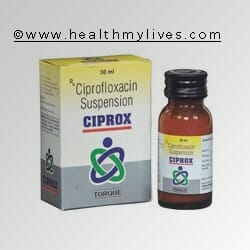
The usual dose for children with urinary tract infections
Complicated urinary tract or kidney infections, ages 1 to 17 years:
- Oral: 10 to 20 mg/kg every 12 hours (maximum 750 mg per dose) for 10 to 21 days.
For children, ciprofloxacin is not a first-choice drug, because children taking it had more joint and tendon problems in studies.
What forms of ciprofloxacin are available? Ciprofloxacin comes in these forms:
- Tablets: 250 mg and 500 mg (Cipro brand), plus 750 mg generic tablets; extended-release tablets (Cipro XR).
- Oral suspension: 5% (250 mg per 5 mL) and 10% (500 mg per 5 mL).
- IV infusion for hospital use.
- Ciprofloxacin ear and eye drops.
Side effects
The most common side effects on the label are nausea, diarrhea, abnormal liver tests, vomiting, and rash. Some people are allergic to ciprofloxacin; tell your doctor about any past reactions to antibiotics. Other side effects include:
- Headache.
- Diarrhea. Call your doctor if it is watery or bloody, which can be a sign of a serious C. difficile infection.
- Upset stomach.
- Abdominal pain.
- Skin that burns more easily in the sun.
Ciprofloxacin has a boxed warning, the FDA's strongest. The FDA warns that fluoroquinolones can cause disabling and potentially permanent side effects that can occur together, including:
- Tendinitis and tendon rupture, most often of the Achilles tendon. The risk is higher in people over 60, people taking steroids, and transplant recipients.
- Nerve damage (peripheral neuropathy).
- Central nervous system effects, such as anxiety, confusion, and hallucinations.
- Worsening muscle weakness in people with myasthenia gravis.
While taking ciprofloxacin, stop taking it and call your doctor right away-
- If you have pain, bruising, or swelling in the back of the ankle, shoulder, hand, or other joints.
- If you develop nerve problems, such as pain, burning, tingling, numbness, or weakness in the arms, hands, legs, or feet, or changes in how you feel heat, cold, or touch.
- If you develop mental or nervous system symptoms such as nightmares, anxiety, trouble sleeping, vision changes, dizziness, confusion, agitation, restlessness, or hallucinations.
If your infection does not improve or gets worse, contact your doctor as soon as possible.
Ciprofloxacin warnings
- After it is mixed, ciprofloxacin oral suspension can be stored below 86°F (30°C) for 14 days. Protect it from freezing and shake it well before each dose.
- Use the measuring device from your pharmacist, not a kitchen spoon.
- Throw away any liquid left after 14 days.
- Store tablets at room temperature in a dry place.
- In pregnancy, ciprofloxacin should be used only if the benefit justifies the risk, so tell your doctor if you are pregnant or breastfeeding.
- Do not take it with tizanidine. It also raises levels of caffeine and theophylline, so tell your doctor about all medicines you take.
- It can cause low blood sugar, sometimes severe, in people taking diabetes medicines, so check your blood sugar closely.
What does ciprofloxacin do and where do I use it?
Ciprofloxacin is a fluoroquinolone (quinolone) antibiotic. Quinolone antibiotics work against bacterial infections.
Doctors may prescribe it for bacterial infections such as:
- Bladder infections (cystitis), when other antibiotics can't be used;
- Lower respiratory tract infections such as some types of pneumonia. For acute bronchitis and sinusitis it is not a first choice. Some drug-resistant tuberculosis regimens use a fluoroquinolone, but usually a different one.
- Middle ear infection and ear canal infection (as ear drops);
- Preventing Meningitis in close contacts of someone with meningococcal disease;
- Bone and joint infections;
- Skin infections;
- Plague and inhaled anthrax;
- Infections of the gastrointestinal tract, such as some kinds of bacterial diarrhea and typhoid fever.
It is no longer recommended for sexually transmitted infections (STDs) such as gonorrhea. The CDC stopped recommending fluoroquinolones for gonorrhea in 2007 because the bacteria became resistant.
Watch the pharmacist review of Ciprofloxacin by #Drug Talk channel.
General FAQs
What type of disease does ciprofloxacin treat?
Ciprofloxacin treats bacterial infections such as urinary tract and kidney infections, some types of pneumonia, bone and joint infections, skin infections, infectious diarrhea, typhoid fever, plague, and inhaled anthrax.
How long does it take for ciprofloxacin to start working?
Many people start to feel better within a few days. If you don’t improve or you feel worse, contact your doctor.
Is ciprofloxacin a strong antibiotic?
Yes, it works against many types of bacteria. Because it can cause serious side effects, doctors save it for infections where it is the right choice, and it is available only with a prescription.
What bacteria does ciprofloxacin kill?
Ciprofloxacin works mainly against gram-negative bacteria such as E. coli, Salmonella, and Pseudomonas aeruginosa. It is weaker against gram-positive bacteria like Streptococcus pneumoniae.
What foods should be avoided when taking ciprofloxacin?
Don’t take ciprofloxacin with dairy products (like milk or yogurt) or calcium-fortified juice alone, because the calcium reduces how much drug your body absorbs. You can take it with a meal that includes them. Also limit caffeine, since ciprofloxacin can increase its effects.
Can I drink alcohol on ciprofloxacin 500mg?
Ciprofloxacin does not have a specific alcohol warning on its label, but alcohol can worsen side effects like dizziness and upset stomach. Ask your doctor or pharmacist whether it is OK for you.
Can I take ciprofloxacin on empty stomach?
Yes. You can take it with or without food. Drink plenty of fluids while taking it, and avoid taking it with dairy products or calcium-fortified juice alone.
Sources
- CIPRO (ciprofloxacin hydrochloride) prescribing information, U.S. Food and Drug Administration
- Gonococcal Infections Among Adolescents and Adults, CDC