10 Most Important Basic And Modified Yoga Postures For Beginners
Contents
Overview
If you are new to yoga, there are essential postures that you can practice yourself to feel comfortable in the practice class or at home.
Yoga includes hundreds of postures (asanas), but beginners only need a handful. For those who want to practice at home, Health My Lives introduces 10 basic yoga postures below.
Regular practice can improve flexibility, strength and balance, and research suggests yoga may help with stress, sleep and some kinds of pain. The NCCIH notes that yoga is generally safe for healthy people, and that beginners do best learning from a qualified instructor.
Yoga works well alongside other activity. For overall fitness, the CDC recommends that adults get 150 minutes of moderate aerobic activity a week plus muscle-strengthening activity on 2 or more days.
Basic yoga postures for beginners
Posture mountain
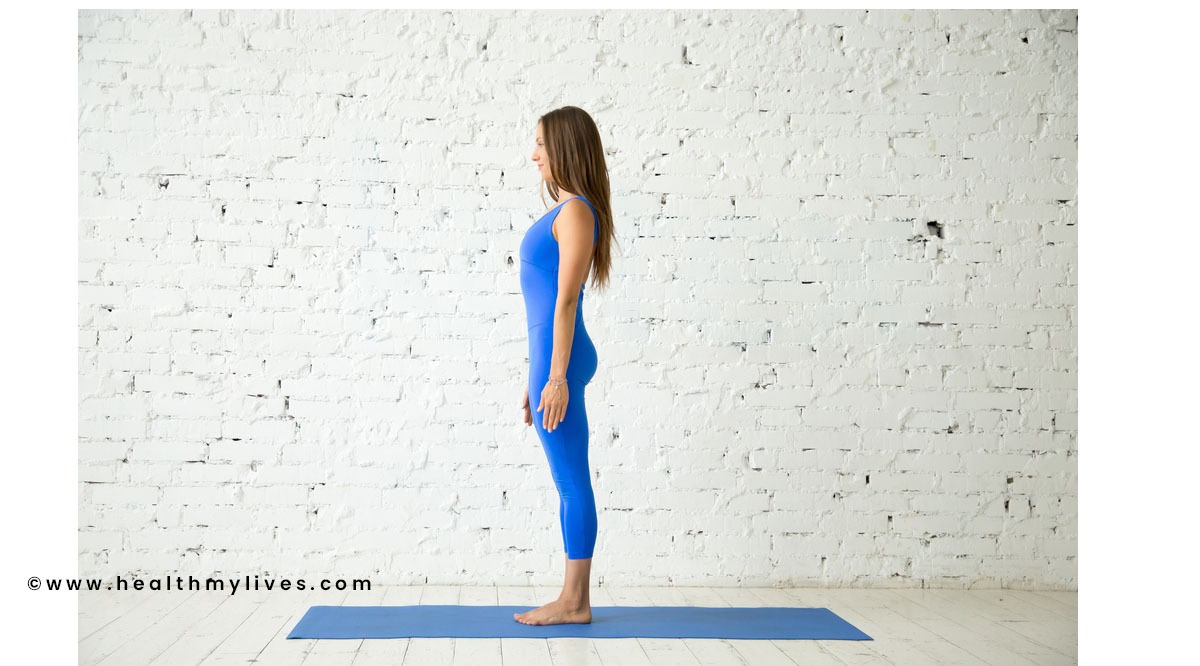
Mountain pose is the foundation for all standing poses. It teaches you to feel the ground under your feet. It looks like simply standing still, but many muscles are working to keep you aligned.
Doing
- Stand up straight with your feet together or hip-width apart.
- Spread your toes and press them firmly into the ground.
- Gently engage the front thigh muscles so the kneecaps lift slightly, without locking your knees.
- Tuck your abs in and up while lifting your chest and relaxing your shoulders.
- Widen the chest. At the same time, keep your palms facing inwards along your body.
- Slowly take a deep breath, exhale gently. Perform 5-8 breaths.
Downward-facing dog (V-posture)
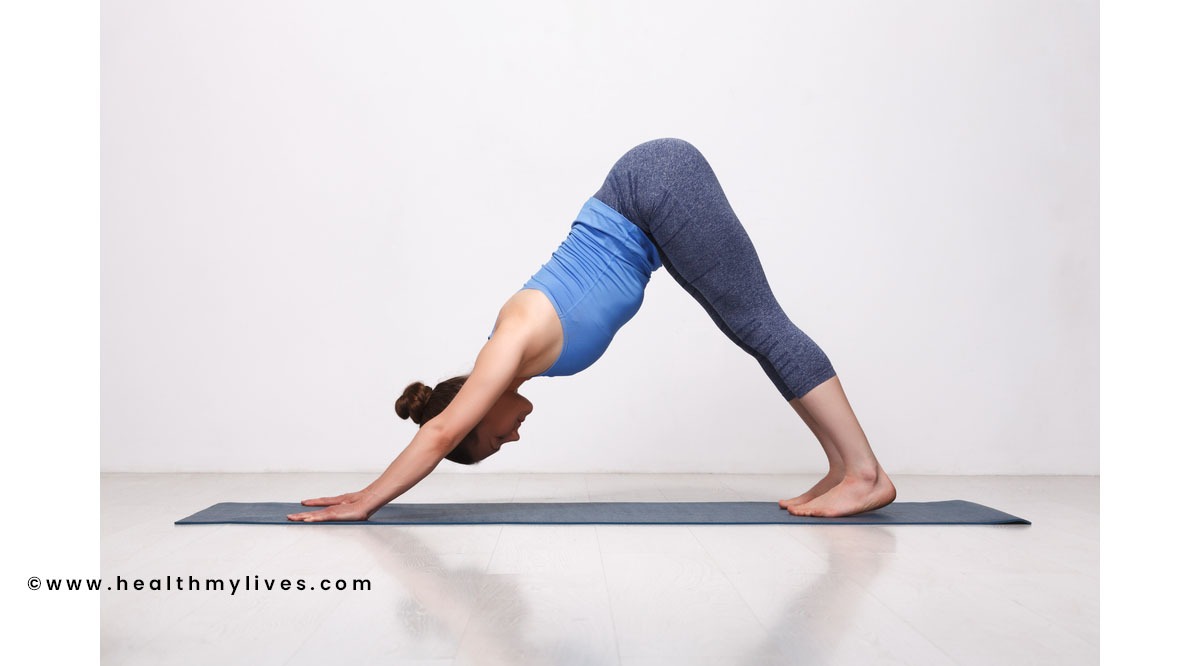
Downward-facing dog is used in most styles of yoga. It stretches and strengthens the whole body.
Doing
- Start on your hands and knees. Tuck your toes and lift your hips up and back until your arms and legs are straight.
- Keep your back long and press your heels toward the floor to make an upside-down V-shape.
- Bend your knees if the backs of your thighs feel too tight.
- Adjust your hands forward if needed.
- Hold for 5-8 breaths and return to child’s pose (see section 10).
Posture plank
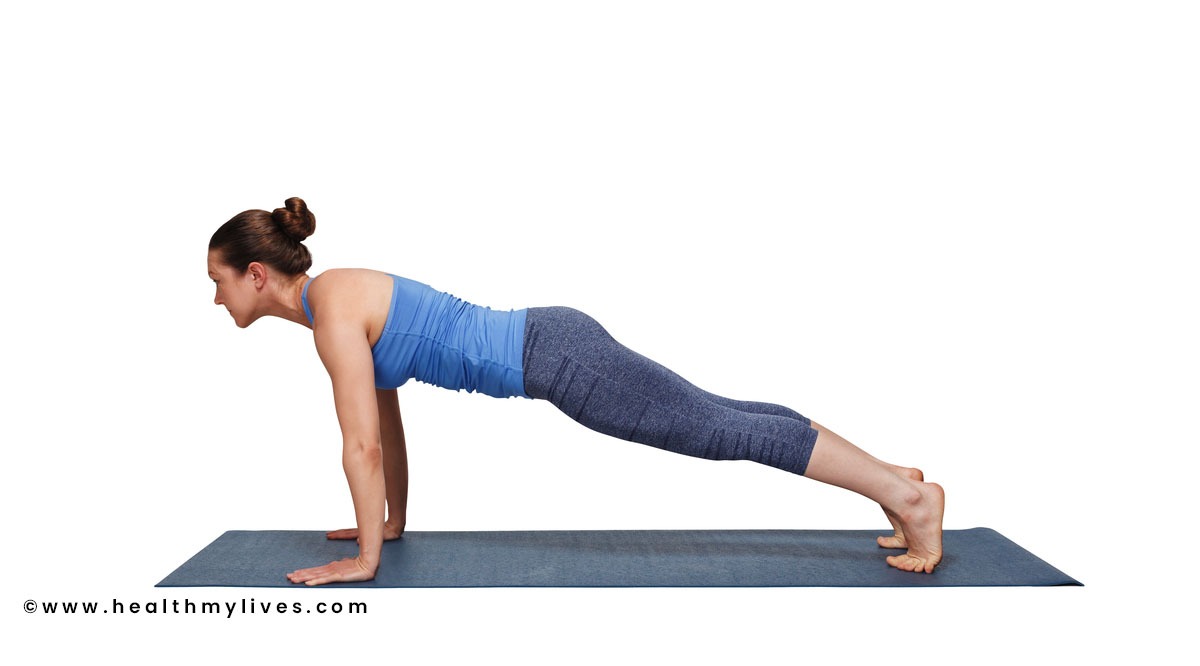
Plank is a basic pose that teaches you to support your body on your hands using your whole body. It strengthens your core, arms and shoulders.
Doing
- From hands and knees, place your hands under your shoulders and step your feet back until your body forms a straight line from head to heels. Lower your knees to the floor for an easier version.
- Squeeze the abdominal muscles, pull your shoulders down and away from your ears, keep your back straight and breathe deeply for 8 to 10 breaths.
- Return to child’s pose. Beginners can repeat a few times.
Posture triangle
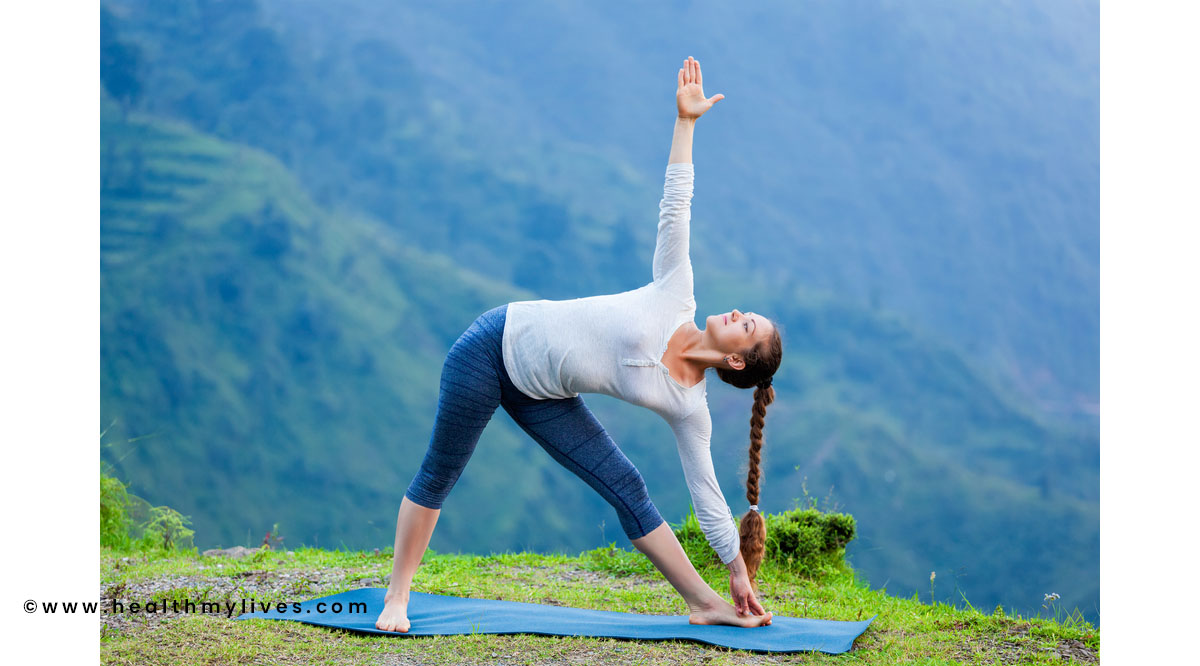
Triangle pose stretches the sides of the waist, opens the chest and strengthens the legs.
Doing
- Stand with your feet about 3 to 4 feet apart.
- Stretch your arms out at shoulder height. Turn your left foot out 90 degrees and your right foot in slightly.
- Reach to the left over your left leg, hinging at the hip.
- Rest your left hand on your shin, ankle or a block (wherever you can keep your chest open) and lift your right arm so that your arms form a straight line.
- Turn your eyes up to your right fingers and hold 5-8 breaths. Return to the original position and repeat the same in the opposite direction.
The posture of the tree
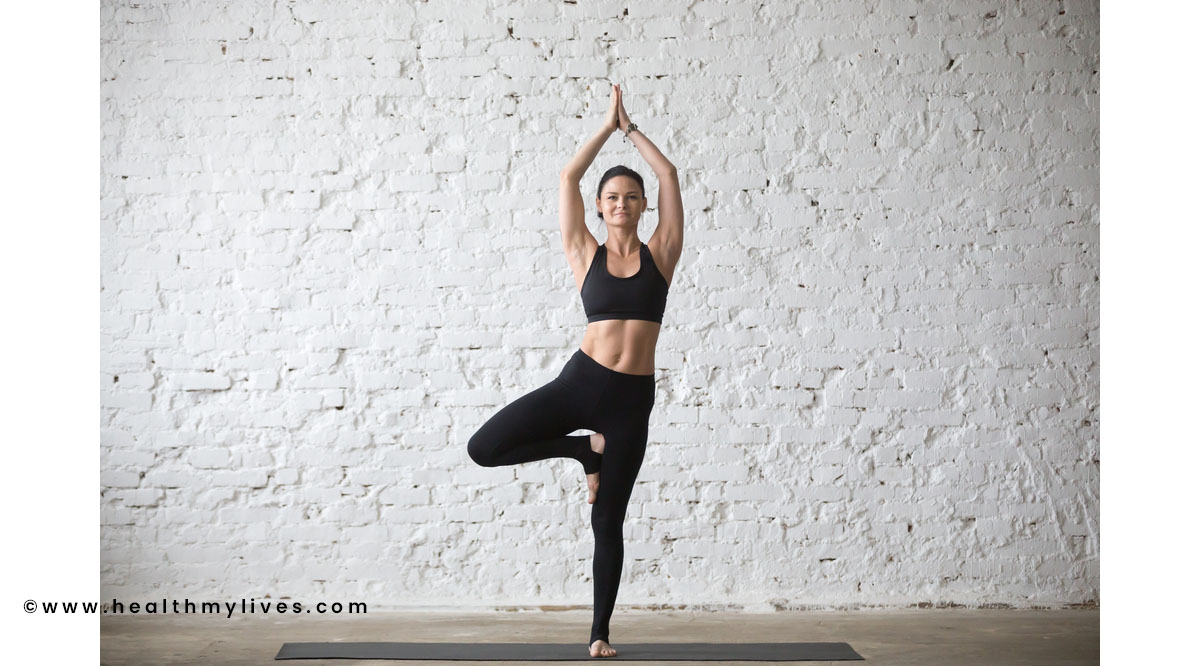
Tree pose is a good balance pose for beginners. It builds concentration and teaches you to breathe steadily while balancing on one leg. It is simple to learn but still challenging.
Doing
- Stand on your left foot. Place the sole of your right foot on your inner left ankle, calf or thigh, but not directly on the knee.
- Bring your palms together at your chest or raise your arms overhead. Use a wall for support if needed.
- Hold 8-10 breaths and then switch sides.
- Keep your hips level, tighten your abs and relax your shoulders.
Warrior position 1
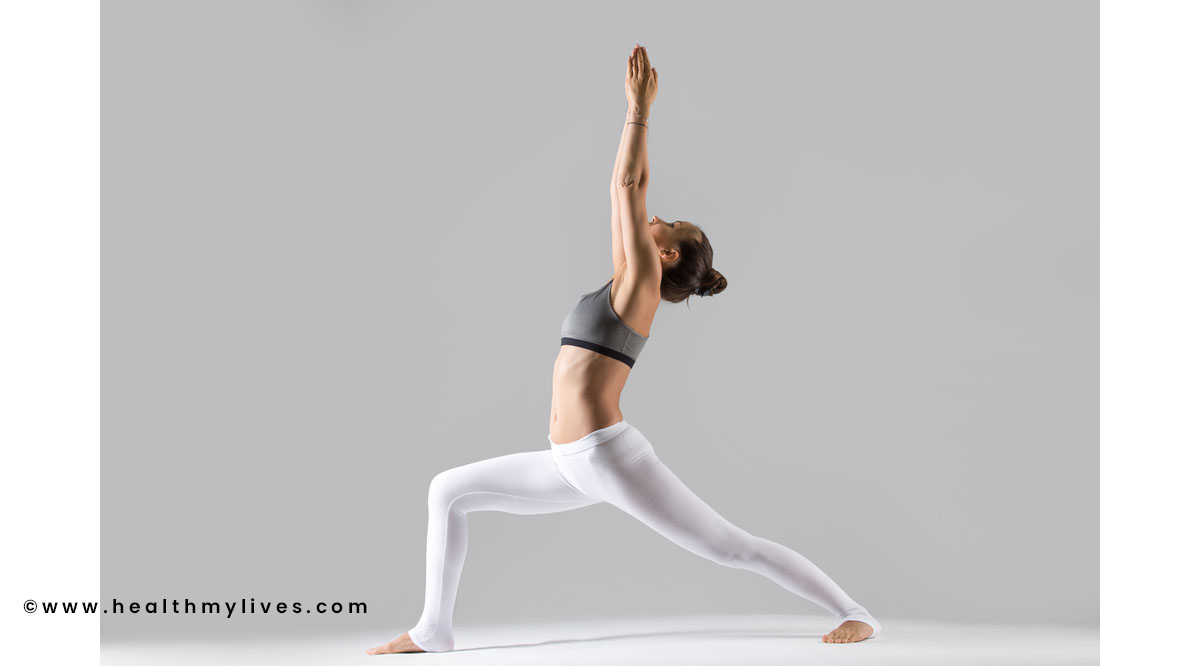
Warrior poses build basic strength and endurance. Warrior 1 stretches the hips and thighs and strengthens the whole lower body.
Doing
- Stand straight, then take a big step back with your left foot. Press the left heel down with the toes turned out about 45 degrees.
- Bend your right knee toward a 90-degree angle, keeping it over your ankle.
- Lift your chest and raise your arms overhead, palms facing or touching, eyes looking forward or up.
- Hold for five breaths. Then return to the original position and repeat with the other leg.
- Warrior position 2
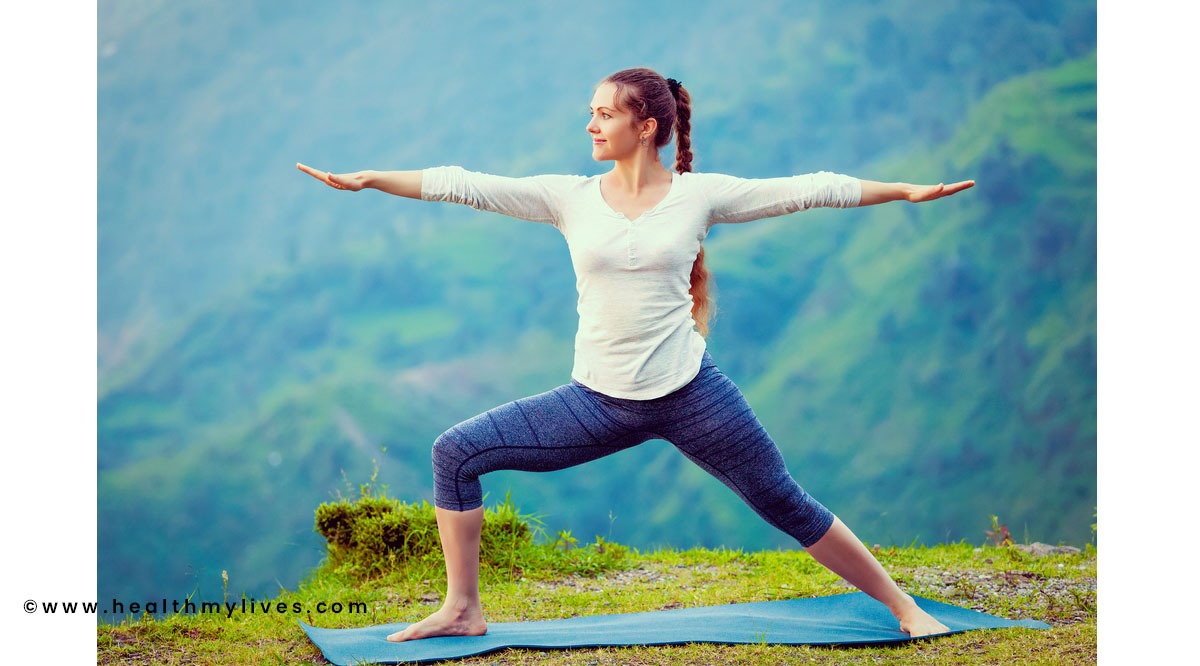
Warrior 2 opens the hips and stretches the inner thighs while strengthening the legs.
Doing
- Stand with your feet wide apart.
- Turn your right toes 90 degrees out and your left toes slightly in.
- Bend your right knee so it stays directly over your ankle.
- Spread your arms out to the sides and look to the right. Hold 8 to 10 breaths. Then do the same for the opposite side.
Seated forward bend
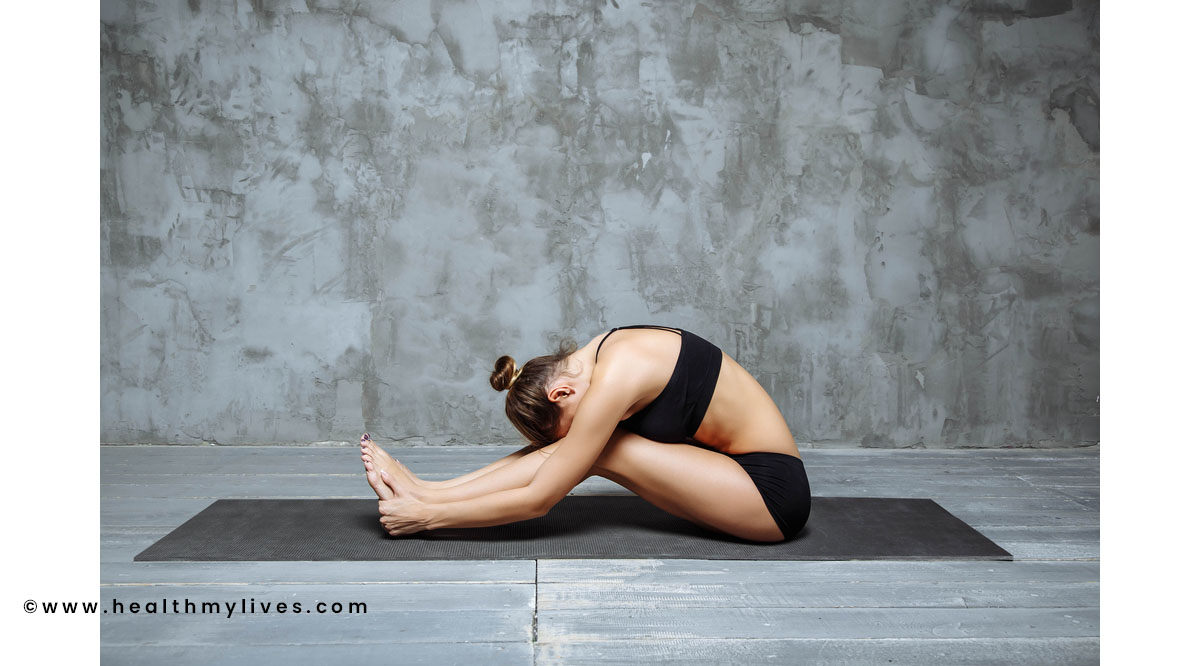
This pose stretches the back and hamstrings and helps you relax. It is a good pose for learning to breathe slowly.
If you feel pain anywhere, stop. If you only feel tightness, keep breathing and the muscles will slowly relax. You can bend your knees as much as you need to.
Doing
- Sit with your legs straight out in front of you, feet together and toes pointing up, hands resting beside your hips.
- Lengthen your spine, then slowly fold forward from your hips.
- Squeeze your lower abs and imagine your navel moving toward your thighs.
- Do this until you feel “tight” but not yet feeling pain, holding for 8-10 breaths.
- During practice, make sure your shoulders, head, and neck are relaxed.
Bridge pose
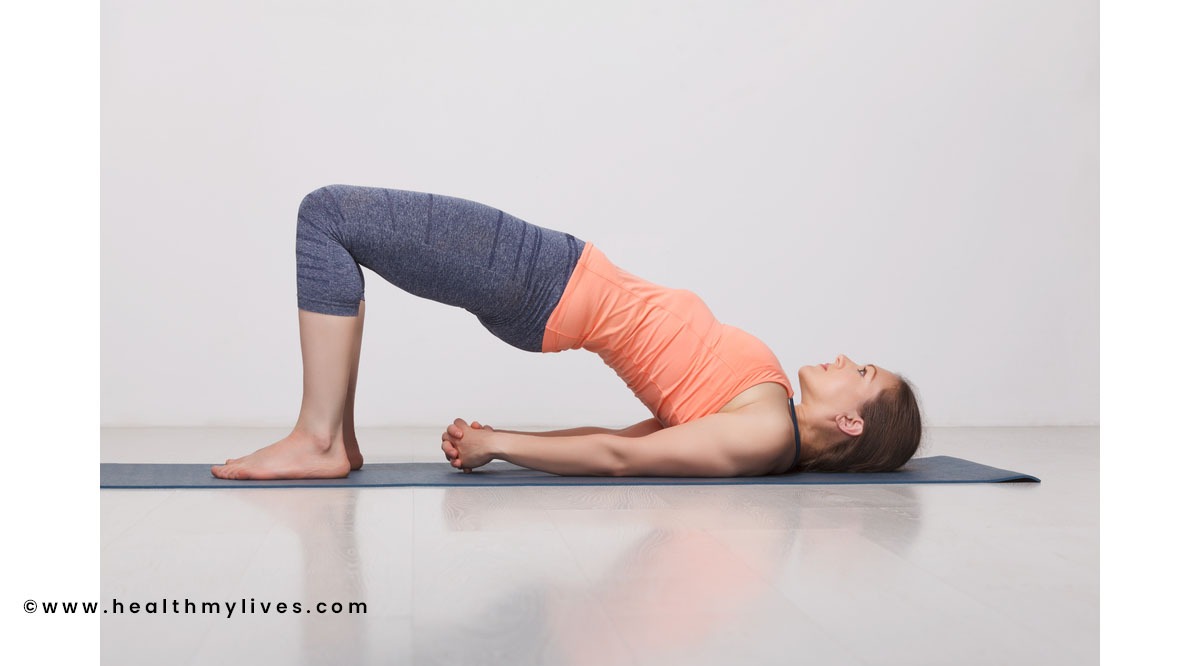
Bridge pose stretches the front of the body and strengthens the back of the body.
Doing
- Lie on your back with your knees bent, feet flat and hip-width apart, arms by your sides.
- Press into your feet and lift your hips off the floor.
- Imagine pulling your heels toward your shoulders to engage the backs of your thighs.
- Hold for 8-10 breaths, then rest and repeat two more times.
Child’s pose (baby’s pose)
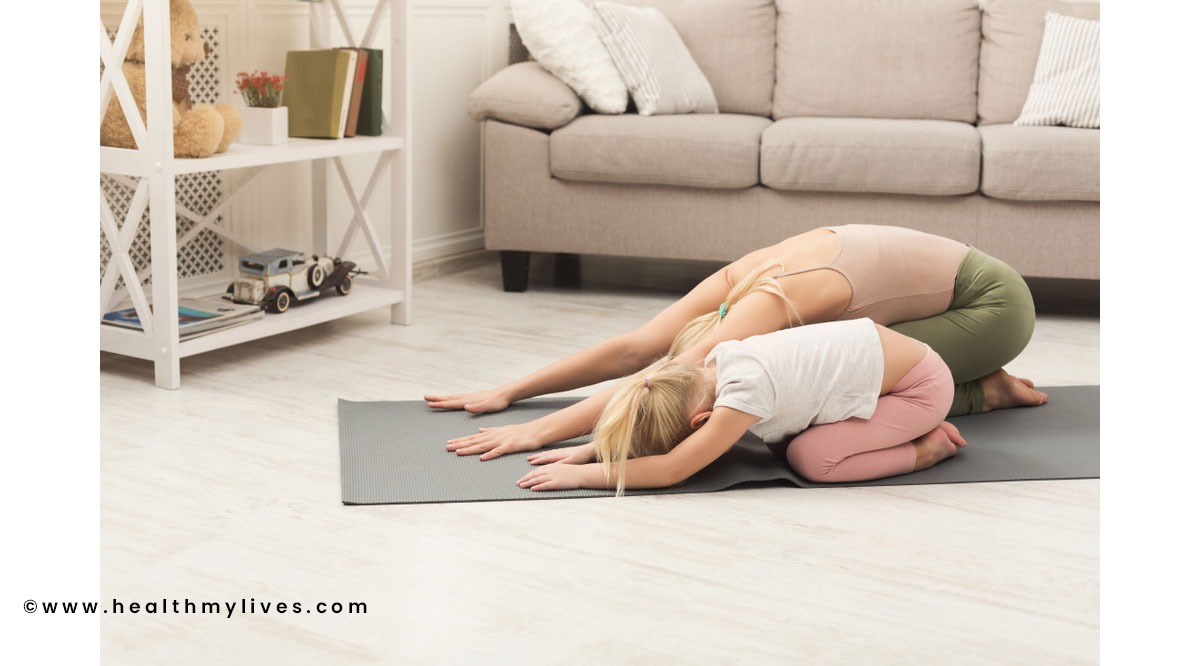
Child’s pose is an ideal resting posture for beginners and experienced students alike.
Also, you can use this posture to relax before bed or whenever you feel stressed.
Doing
- Start on your hands and knees, then slowly sit back so your buttocks rest on your heels, and stretch your arms forward on the floor.
- Lower your forehead and let the whole body relax.
- With this position, hold for as long as you like.
Sources
- Yoga: Effectiveness and Safety, NCCIH (NIH)
- Adult Activity: An Overview, CDC