
Creatine – What does creatine do and how it works?
Contents
- Overview
- Creatine definition
- Creatine Dosage
- What does creatine do?
- Boost the energy of muscle cells
- Helps in the growth of muscles
- Improves your exercise performance
- Deal with a brain disease like Parkinson’s Disease
- Minimizes the neurological disorders
- Decrease the tiredness and boost concentration
- Safer to use and widely available
- What are the side effects of creatine?
- How does creatine work?
- Sources
This post was most recently updated on July 25th, 2023
Overview
Is creatine a steroid?
No. Creatine is not a steroid or a hormone. It is a compound your body makes on its own and also gets from foods like meat and fish, and it is one of the most popular sports supplements.
Research shows it can improve strength, muscle mass, and performance in short, high-intensity exercise.
Researchers have also studied creatine for brain and muscle diseases, but those uses are still experimental.
Some people worry that creatine is unsafe or causes serious side effects.
But here is what the evidence says.
The International Society of Sports Nutrition (ISSN) reviewed the research and concluded that creatine is safe and well tolerated in healthy people, even at up to 30 grams a day for 5 years.
Do you know an interesting fact about creatine?
It is one of the most studied supplements in sports nutrition.
Studies have consistently shown that it raises creatine levels in muscle and improves high-intensity exercise performance.
Before we get to the details, here is a simple definition of creatine.
Creatine definition
Chemically, creatine is an organic compound with the formula (H2N)(HN)CN(CH3)CH2CO2H.
But what does HealthMyLives say about creatine in basic terms?
Well, it is a natural substance found in the human body that helps muscle cells make energy quickly, especially during short bursts of hard effort.
For example: Lifting a light bag of groceries takes little effort, but lifting a heavy barbell or sprinting takes a quick burst of energy.
That burst is where creatine helps.
Creatine is popular with athletes and people who train in the gym.
This is because it can help them train harder and recover between sets.
Bodybuilders also use it to support muscle growth.
Creatine is made from amino acids.
Your liver and kidneys make it mainly from the amino acids arginine and glycine, with help from methionine. About half of the creatine you need comes from food.
In the body, about 95% of creatine is stored in skeletal muscle, and the rest is mainly in the brain and other tissues.
When you take creatine supplements, your muscles store more phosphocreatine.
Phosphocreatine helps quickly rebuild ATP, the molecule cells use for energy.
As a result, your muscles have more fuel for short, intense efforts.
This is how creatine helps you perform better during hard exercise.
The extra creatine also pulls water into muscle cells, which adds a little body weight. See the dosage section below.
Disclaimer: HealthMyLives does not promote any illegal supplements that are harmful and illegal.
If you have kidney disease, diabetes, or another health condition, or you take medicines, talk with your doctor before using creatine.
Choose a product that has been tested by an independent lab, and follow the dosage on the label.
Creatine Dosage
Creatine does not make muscles grow and then shrink when you stop. When you stop taking it, muscle creatine stores return to normal over about 4 to 6 weeks, and some of the water weight goes away.
The most studied product is creatine monohydrate. Here is the dosage used in most research.
A common "loading" approach is about 20 grams a day for 5 to 7 days.
The 20 grams are split into four doses of 5 grams each through the day.
Taking creatine with carbohydrates, or carbohydrates and protein, helps your muscles retain more of it.
This is because insulin, released after eating, helps move creatine into muscle cells.
After loading, 3 to 5 grams a day is enough to keep muscle stores high.
You can also skip loading and take about 3 grams a day from the start. Muscle stores fill up more slowly, over about 4 weeks.
Drink enough fluids as usual, especially when you exercise in the heat.
According to the ISSN review, studies show creatine either has no effect on or reduces dehydration, muscle cramping, and injuries in athletes.
What does creatine do?
Here are the main benefits of creatine, according to the research:
Creatine does not lower blood sugar or treat diabetes. Some early studies suggest it may help muscles use blood sugar better when combined with exercise, but more research is needed.
It increases energy stores in muscle cells, which can help you lift more or sprint harder.
Boost the energy of muscle cells
Creatine helps muscles quickly recycle ATP during hard effort.
This lets you do more work in each training session, which over time can lead to more muscle and strength.
Helps in the growth of muscles
Combined with strength training, creatine helps increase lean muscle mass.
How does creatine boost the growth of muscle mass?
Creatine lets you train harder and complete more repetitions.
Over weeks, this extra training work leads to greater muscle growth.
It also draws water into muscle cells, which may signal muscles to grow, and some early weight gain is this water.

A man who has got his performance successfully improved and build muscles by using creatine.
Improves your exercise performance
Creatine improves performance in short, high-intensity exercise such as weightlifting, sprinting, and repeated sprints.
It has little effect on long, steady endurance exercise.
Research also suggests it may help recovery after hard exercise.
Deal with a brain disease like Parkinson’s Disease
Creatine was studied as a way to slow Parkinson’s disease( A brain-related disease.), but it did not work.
A large NIH-funded trial of 1,741 people found that taking creatine for at least 5 years did not improve outcomes in Parkinson disease, and the trial was stopped early.
Minimizes the neurological disorders
Creatine is being studied for other brain-related conditions, such as concussion recovery, but there is no proven benefit yet. It is not a treatment for stroke.
Decrease the tiredness and boost concentration
Some small studies suggest creatine may help mental performance when people are short on sleep, and in older adults.
The evidence is limited, so don’t expect creatine to cure tiredness. Ongoing fatigue should be checked by a doctor.
Safer to use and widely available
Creatine is one of the most studied supplements, and the ISSN considers it safe for healthy people at recommended doses.
You can buy it in stores and online.
Supplements are not reviewed by the FDA for safety or effectiveness before they are sold, so choose a product tested by an independent lab.
What are the side effects of creatine?
We have discussed creatine’s benefits earlier.
If you jumped straight to this section, the benefits are covered above.
Creatine is a widely used supplement, and many athletes use it for gaining energy and muscle.
We don’t recommend it just because it is popular.
We recommend it because many controlled studies support its benefits and safety.
Most people who follow the recommended doses have no problems.
Short-term loading of about 20 grams a day for 5 to 7 days is considered safe for healthy adults.
Some side effects of creatine are as given below:
- Large single doses may cause nausea, stomach upset, or diarrhea. Splitting the dose helps.
- Studies have not found that creatine causes dehydration or cramps in healthy people. Still, drink enough fluids during exercise, as you should anyway.
A tip for you: Drink water regularly during exercise.
When training in hot weather, take breaks in the shade.
This helps prevent heat illness, whether or not you use creatine.
- Creatine often adds some body weight in the first week. Much of this early gain is water stored in muscle, not fat.
- Some people have reported irregular heartbeat while using creatine. Research has not shown that creatine causes heart rhythm problems, but see a doctor if you notice palpitations.
- People with kidney disease should not use creatine unless their doctor approves. Creatine can raise creatinine on blood tests, so tell your doctor you take it.
- There is not enough research on creatine supplements during pregnancy and breastfeeding. Talk with your doctor before using it.
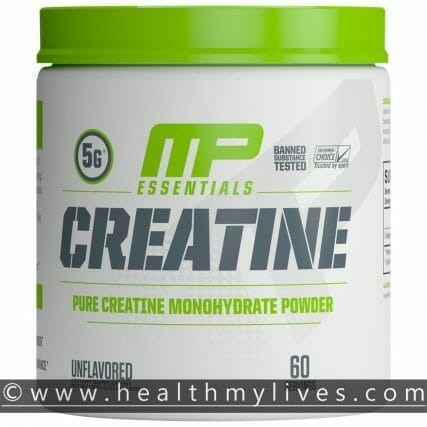
A sample of creatine powder.
How does creatine work?
In simple words, your muscles use ATP for fuel during short, intense contractions.
Creatine helps supply that ATP.
ATP (adenosine triphosphate) is the energy molecule of cells. It has three phosphate groups.
During hard exercise, muscles use up ATP within seconds.
Phosphocreatine gives its phosphate to rebuild ATP quickly, so you can keep up a burst of power.
By raising phosphocreatine stores, creatine helps muscles keep producing energy during repeated hard efforts.
Here is the complete video by Dorian Wilson under the topic “How does creatine work?”.
Sources
- International Society of Sports Nutrition position stand: safety and efficacy of creatine supplementation in exercise, sport, and medicine, Journal of the International Society of Sports Nutrition (via PMC)
- Effect of creatine monohydrate on clinical progression in patients with Parkinson disease: a randomized clinical trial, JAMA (via PubMed)